The Story of a Life
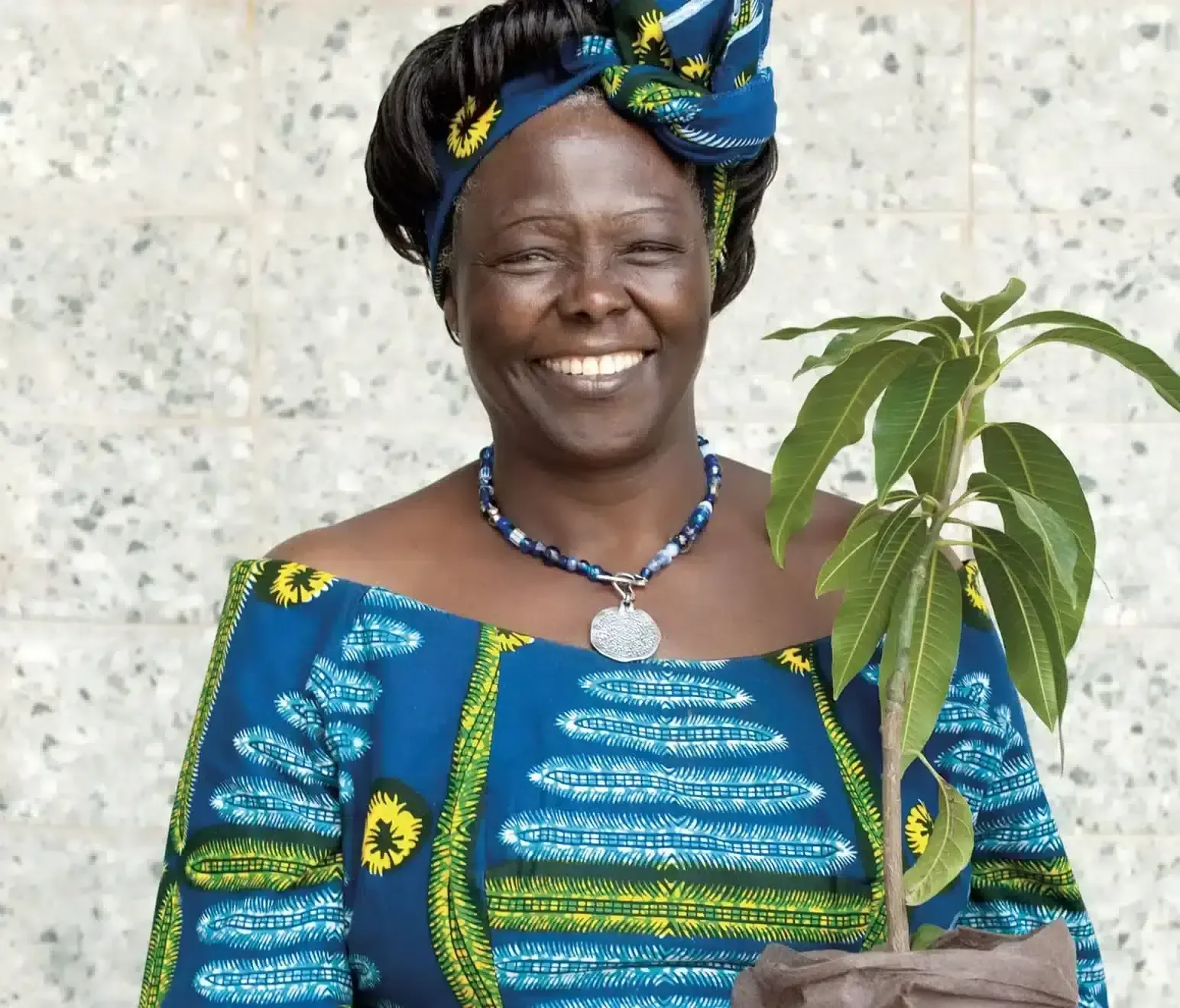
Wangari Maathai (1940–2011) was a Kenyan scientist, environmentalist, political activist, and human rights advocate. She was the first African woman to receive the Nobel Peace Prize, dedicating her life to environmental protection, women's empowerment, and the promotion of democracy.
Born on April 1, 1940, in Nyeri, Kenya, she grew up in a rural environment surrounded by nature. Her childhood among Kenya's landscapes shaped her deep connection to the land and natural resources.
Through a scholarship opportunity, she continued her education in the United States before returning to Kenya. She became the first woman in East and Central Africa to earn a PhD, receiving her doctorate in biological sciences from the University of Nairobi.
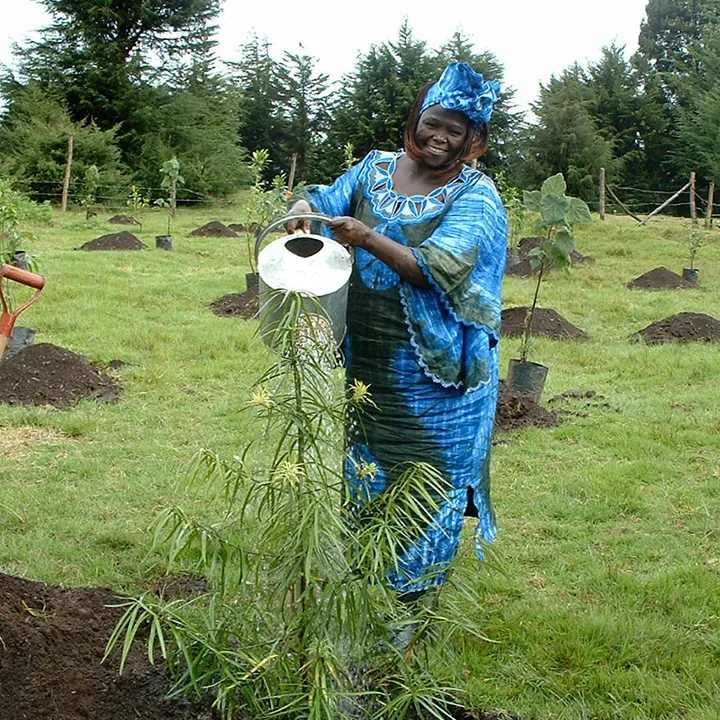
In 1977, she founded the Green Belt Movement, an environmental organization that empowered communities, especially rural women, to plant trees, fight deforestation, restore ecosystems, and improve livelihoods.
Through this movement, tens of millions of trees were planted across Kenya and other African regions, while creating social and economic opportunities for thousands of women.
Her work went beyond environmental protection. Wangari Maathai became a powerful voice for democracy, social justice, and women's rights. Despite intimidation, arrests, and opposition, she continued defending her values.
In 2004, she received the Nobel Peace Prize for her contribution to sustainable development, democracy, and peace.
Wangari Maathai left a global legacy by proving that protecting nature, defending human rights, and empowering communities are deeply connected missions.