Africa's Builders
An archive isn't a repository of the past. It's a blueprint for what we're about to build.
20
Results
5
Categories
Results: 20

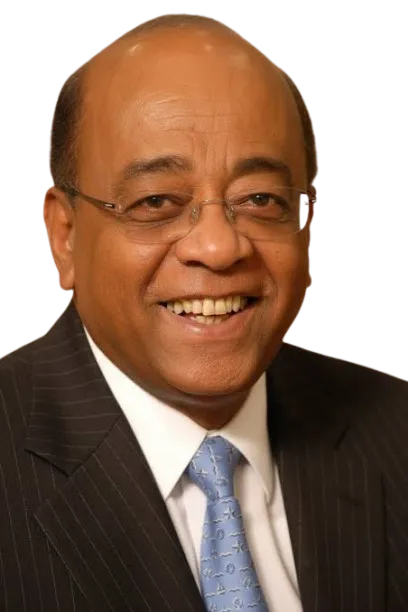
Mo Ibrahim
Tech Entrepreneur & Governance Advocate · Sudan
Mo Ibrahim founded Celtel International in 1998 and built it into one of Africa's leading mobile telecoms companies, providing phone access to millions of Africans for the first time. He sold Celtel in 2005 for $3.4 billion. He then created the Mo Ibrahim Foundation, which publishes the Ibrahim Index of African Governance and awards the Ibrahim Prize for Achievement in African Leadership — the world's largest individually awarded prize ($5 million) — to former African heads of state who demonstrate exemplary leadership.
- ◆Founded and sold Celtel International for $3.4 billion (2005)

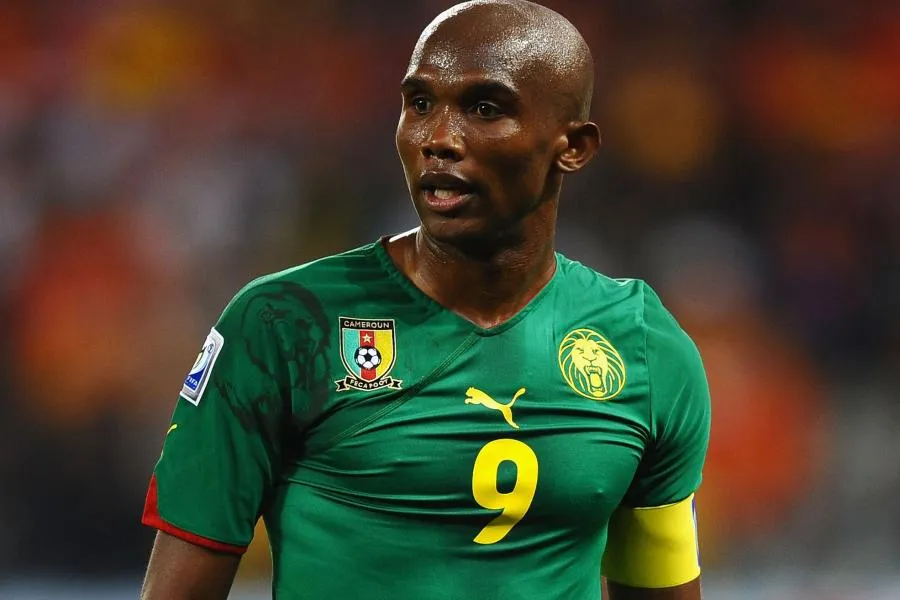
Samuel Eto'o
Football Champion & Philanthropist · Cameroon
Samuel Eto'o is widely regarded as one of the greatest African footballers of all time. A four-time African Footballer of the Year, he is the all-time top scorer in Africa Cup of Nations history and won the UEFA Champions League three times with three different clubs (Barcelona x2, Inter Milan x1). Alongside his playing career, he founded the Samuel Eto'o Foundation to support vulnerable children and communities in Cameroon. He became President of the Cameroon Football Federation in 2021.
- ◆4x CAF African Footballer of the Year (2003, 2004, 2005, 2010)

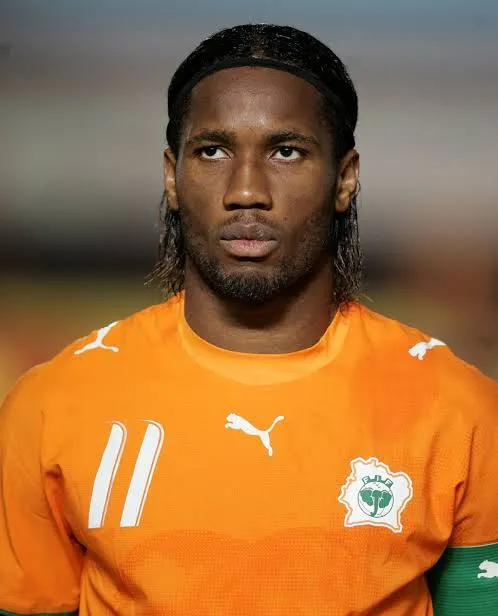
Didier Drogba
Football Legend & Humanitarian · Cote d'Ivoire
Didier Drogba is not only one of the greatest strikers in football history but also a force for peace. At Chelsea FC, he scored the equaliser and the decisive penalty in the 2012 Champions League final. But his most remarkable act came in 2006: a brief ceasefire was declared in Cote d'Ivoire's civil war to watch the national team — and Drogba personally appealed for peace on live television, dropping to his knees to beg the warring factions to lay down their arms. He is a UNDP Goodwill Ambassador and has built hospitals and schools in Cote d'Ivoire.
- ◆4x Premier League top scorer with Chelsea FC

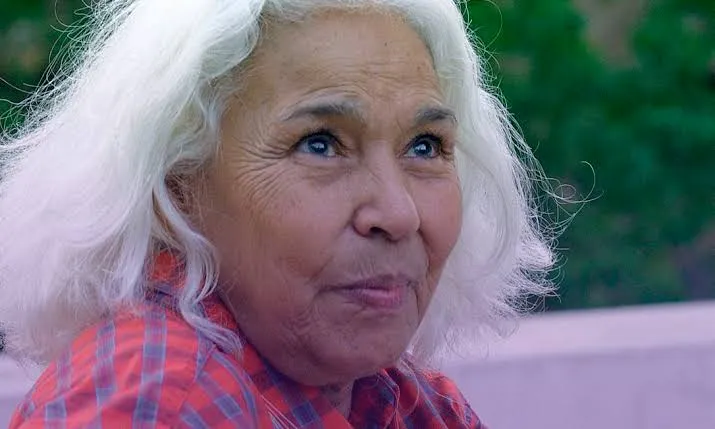
Nawal El Saadawi
Feminist Writer & Physician · Egypt
Nawal El Saadawi was one of the most fearless feminist voices to emerge from the Arab world and Africa. A physician who worked in rural Egypt in the 1950s, she witnessed first-hand the toll of poverty, patriarchy, and female genital mutilation on women's lives. Her book Woman at Point Zero and her landmark non-fiction work The Hidden Face of Eve were banned in Egypt, cost her job at the Ministry of Health, and put her on extremist death-threat lists — but were translated into more than 30 languages. She continued writing and fighting until her death in 2021 at age 89.
- ◆Author of more than 55 books translated into 30+ languages

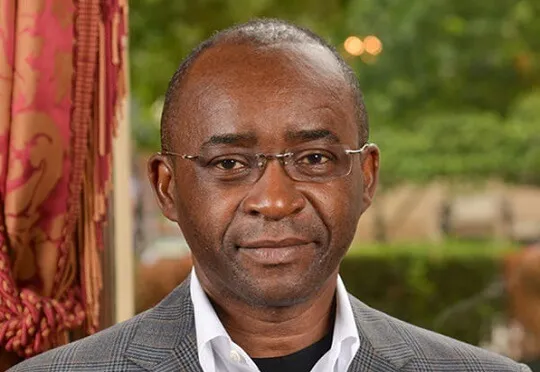
Strive Masiyiwa
Tech Entrepreneur & Philanthropist · Zimbabwe
Strive Masiyiwa is the founder and executive chairman of Econet Wireless, one of Africa's largest telecom groups, which he built after a five-year legal battle against the Zimbabwean government to win a telecoms licence. Today Econet operates across Africa with interests spanning fintech, media, e-health, and edtech. Through the Higherlife Foundation, he has provided scholarships to over 250,000 African students. One of the first Africans to join the Gates-Buffett Giving Pledge, he is a leading voice for African entrepreneurship.
- ◆Founded Econet Wireless (1993)

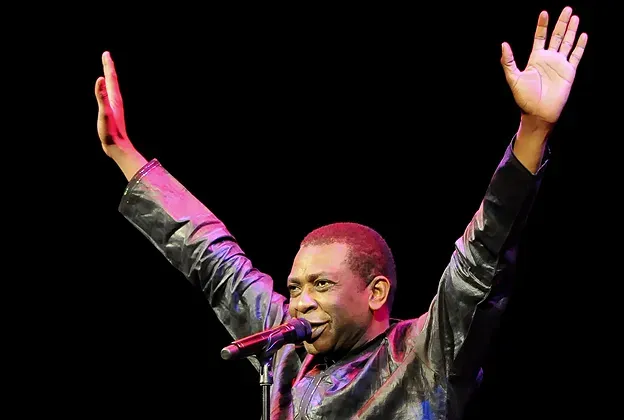
Youssou N'Dour
Singer, Musician & Former Government Minister · Senegal
Youssou N'Dour is one of the most celebrated musicians in the world and the leading figure of Mbalax — the Senegalese fusion of traditional sabar drumming and Western music. His extraordinary vocal range earned him collaborations with Peter Gabriel, Paul Simon, and Neneh Cherry. His song 7 Seconds (1994) with Neneh Cherry was a global hit reaching number one in 18 countries. A social entrepreneur, he owns several media companies and was appointed Senegal's Minister of Culture and Tourism in 2012.
- ◆Grammy Award for Best Contemporary World Music Album (2004)

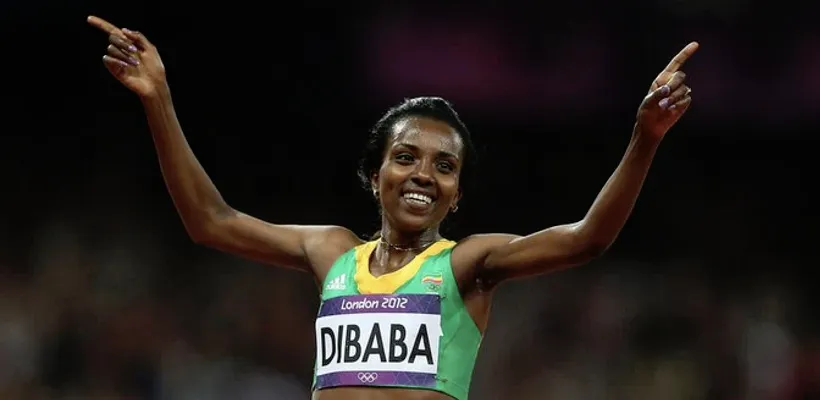
Tirunesh Dibaba
Triple Olympic Champion · Ethiopia
Tirunesh Dibaba is the most decorated female distance runner in Olympic history. Known as the 'Baby-Faced Destroyer', she is a triple Olympic gold medallist (5,000 m and 10,000 m at Beijing 2008; 10,000 m at London 2012) and five-time World Cross Country champion. Her world record in the 10,000 m stood for over a decade. Born in the small village of Bekoji — which has produced more distance running champions per capita than anywhere on Earth — she is proof that greatness can emerge from anywhere.
- ◆Three Olympic gold medals (5,000 m & 10,000 m: Beijing 2008; 10,000 m: London 2012)

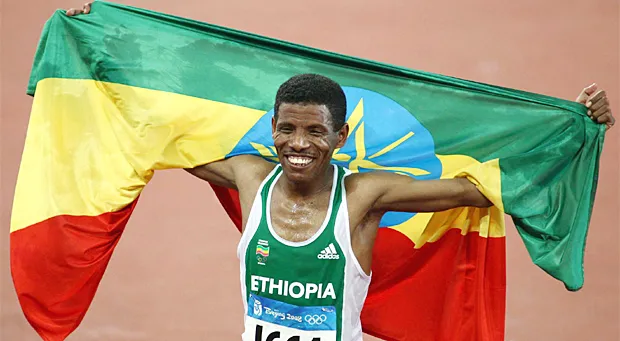
Haile Gebrselassie
Long-Distance Runner & Entrepreneur · Ethiopia
Haile Gebrselassie is one of the greatest long-distance runners in history. He broke the world record in the 10,000 metres four times and set 27 world records across distances from 2,000 m to the marathon during his career. He is a two-time Olympic champion (10,000 m, Atlanta 1996 and Sydney 2000) and four-time World Championship gold medallist. After retiring, he became a successful businessman in Ethiopia, proving that athletic greatness can be the launchpad for a second act of societal impact.
- ◆Two-time Olympic gold medallist (10,000 m: Atlanta 1996, Sydney 2000)
“An archive isn't a repository of the past. It's a blueprint for what we're about to build.”— Curator's Note No. 84

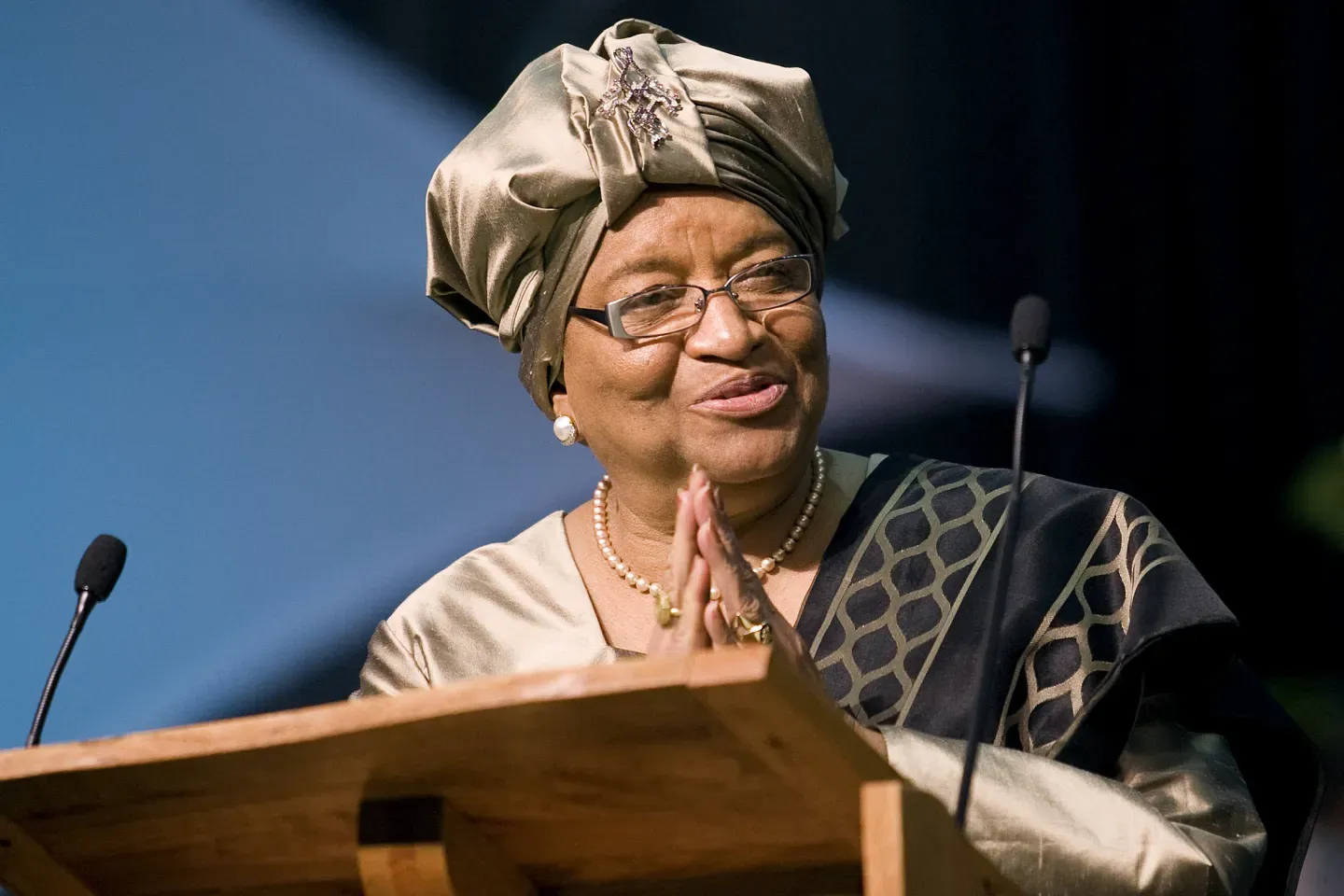
Ellen Johnson Sirleaf
Politician & First Female African Head of State · Liberia
Ellen Johnson Sirleaf became Africa's first elected female head of state when she won Liberia's presidential election in 2005, following a devastating 14-year civil war. A Harvard-trained economist, she steered Liberia through post-war reconstruction, secured debt relief, and rebuilt the nation's institutions. She was awarded the Nobel Peace Prize in 2011 for her non-violent struggle for women's safety and their rights to full participation in peace-building. She served two terms, stepping down in 2018.
- ◆Africa's first elected female head of state (2006)

Kofi Annan
UN Secretary-General & Nobel Peace Laureate · Ghana
Kofi Annan was the seventh Secretary-General of the United Nations (1997-2006), the first to rise from within the UN staff. Under his leadership, he articulated the Millennium Development Goals, championed the "Responsibility to Protect" doctrine, and navigated the UN through the HIV/AIDS crisis and the post-9/11 world. He and the UN jointly received the Nobel Peace Prize in 2001. A gentle but unflinching diplomat, Annan believed fundamentally that global problems require global solutions, and that human dignity is non-negotiable.
- ◆Nobel Peace Prize (2001) — shared with the United Nations
Miriam Makeba
Singer & Civil Rights Activist · South Africa
Known as "Mama Africa," Miriam Makeba became the voice of Black South Africa during the darkest years of apartheid. Exiled from her homeland in 1960 after testifying against apartheid at the United Nations, she performed worldwide, collaborated with Harry Belafonte, and made the Click Song a global hit. Her song Pata Pata reached number one in several countries. She returned to South Africa in 1990 at Nelson Mandela's personal invitation and in 2008 died on stage in Italy at 76, performing at a benefit concert until her last breath.
- ◆Grammy Award (1966) — with Harry Belafonte
Desmond Tutu
Archbishop & Human Rights Champion · South Africa
Archbishop Desmond Mpilo Tutu was the moral conscience of South Africa during and after apartheid. The first Black Archbishop of Cape Town, he coined the term "Rainbow Nation" to describe post-apartheid South Africa's multicultural vision. He chaired the Truth and Reconciliation Commission (1995-1998), offering a model of restorative justice the world has since tried to emulate. He received the Nobel Peace Prize in 1984. His theology of ubuntu — "I am because we are" — continues to inspire peacebuilders worldwide.
- ◆Nobel Peace Prize (1984)
Nelson Mandela
Statesman & Anti-Apartheid Leader · South Africa
Nelson Rolihlahla Mandela spent 27 years in prison — 18 of them on Robben Island — for his fight against apartheid, the institutionalised system of racial segregation in South Africa. Released in 1990, he led negotiations that ended apartheid peacefully and became South Africa's first democratically elected president (1994-1999). He was awarded the Nobel Peace Prize alongside F.W. de Klerk in 1993. Madiba became a global symbol of reconciliation, dignity, and the long arc of justice.
- ◆Nobel Peace Prize (1993)
Aliko Dangote
Entrepreneur & Industrialist · Nigeria
Aliko Dangote is Africa's richest person and one of the most significant industrialists the continent has ever produced. Starting from a trading business in Lagos, he built the Dangote Group into a conglomerate spanning cement, sugar, flour, salt, and oil refining. His Dangote Cement is the largest cement producer in Africa. The Dangote Refinery in Lagos will be the world's largest single-train petroleum refinery with a capacity of 650,000 barrels per day — a project largely self-funded to reduce Africa's dependence on imported fuel.
- ◆Africa's richest person (Forbes, multiple years)
Fela Kuti
Musician & Political Activist · Nigeria
Fela Anikulapo-Kuti created Afrobeat — a fusion of jazz, funk, and traditional Yoruba music — and used it as a weapon against military dictatorship and corruption in Nigeria. His commune, the Kalakuta Republic, was a declared independent state. Imprisoned dozens of times and surviving a brutal army raid on his home, he never stopped performing or protesting. His music, from "Zombie" to "Lady," remains a blueprint for African artistic resistance, influencing artists from Beyonce to Kendrick Lamar.
- ◆Created the Afrobeat genre
Chinua Achebe
Novelist & Poet · Nigeria
Chinua Achebe's 1958 novel Things Fall Apart is the most widely read book in modern African literature, with over 20 million copies sold in 57 languages. Set in pre-colonial Igboland, it challenged Western narratives about Africa and gave voice to a continent's complex humanity. Achebe taught at universities across the world and was awarded the Man Booker International Prize in 2007. He remains the founding father of African literature in English.
- ◆Things Fall Apart — 20 million copies sold in 57 languages
“An archive isn't a repository of the past. It's a blueprint for what we're about to build.”— Curator's Note No. 84
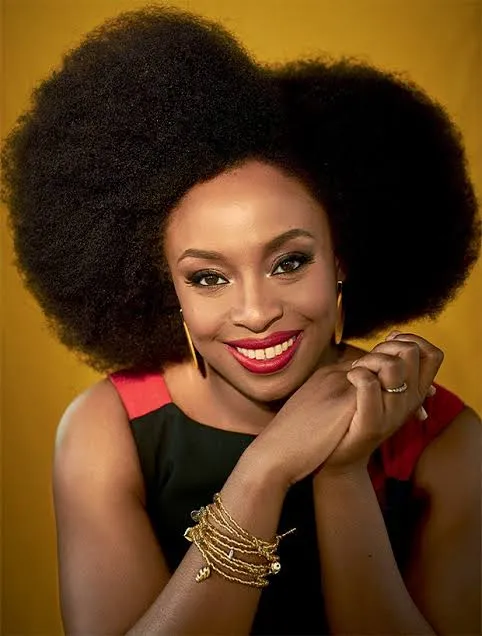
Chimamanda Ngozi Adichie
Writer & Cultural Thinker · Nigeria
Chimamanda Ngozi Adichie is one of the most influential voices of her generation. Her novels — Purple Hibiscus, Half of a Yellow Sun, and Americanah — have been translated into more than 30 languages and earned her the Orange Prize, among many other honours. Her 2009 TED Talk "The Danger of a Single Story" is one of the most viewed talks in TED history. Her 2012 talk "We Should All Be Feminists" became a book and was sampled by Beyonce.
- ◆Orange Prize for Fiction (Half of a Yellow Sun, 2007)
Lupita Nyong'o
Academy Award-Winning Actress · Kenya
Born in Mexico City to Kenyan parents and raised in Nairobi, Lupita Nyong'o became a global sensation when her debut film role in 12 Years a Slave (2013) earned her the Academy Award for Best Supporting Actress. She has since starred in blockbusters including Black Panther, Us, and Star Wars. A vocal advocate for diversity and representation, she uses her platform to champion African stories and to inspire a generation of young Africans in the arts.
- ◆Academy Award for Best Supporting Actress (12 Years a Slave, 2014)
Eliud Kipchoge
Marathon World Record Holder · Kenya
Eliud Kipchoge is widely regarded as the greatest marathon runner in history. On 12 October 2019, he became the first human being to run a marathon in under two hours, completing the INEOS 1:59 Challenge in Vienna in 1:59:40. He holds the official world record (2:00:35, Berlin 2023) and is a two-time Olympic marathon champion (Rio 2016, Tokyo 2020). For Kipchoge, running is not merely a sport — it is a philosophy: "No human is limited."
- ◆First human to run a sub-2-hour marathon (INEOS 1:59, Vienna 2019)
Wangari Maathai
Environmental Activist & Nobel Laureate · Kenya
Wangari Maathai founded the Green Belt Movement in 1977, mobilising communities — especially women — to plant over 51 million trees across Kenya. In 2004, she became the first African woman to receive the Nobel Peace Prize, recognised for her contribution to sustainable development, democracy, and peace. A member of parliament and Assistant Minister for the Environment, she wove together ecology, human rights, and social justice into a single, powerful vision.
- ◆Nobel Peace Prize (2004)